How to Evaluate a Used Designer Bag Like a Professional Reseller
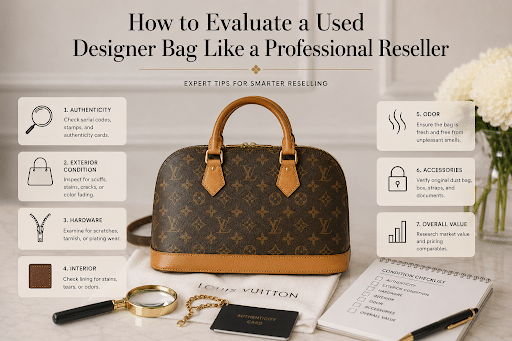
If you want to learn how to inspect a pre-owned handbag, used bag evaluation checklist, buying preloved bag tips should start with one simple mindset shift: professional resellers do not fall in love with a bag first — they evaluate it, authenticate it, grade it, and price it. Within minutes, an experienced buyer is already weighing authenticity confidence, condition, resale demand, missing accessories, and the maximum safe offer.
Whether you are shopping for your first Chanel flap, sourcing inventory, or deciding whether your Louis Vuitton tote is worth selling, this guide walks you through the same practical workflow a reseller would use before putting money on the table.
The 90-Second Triage: Authentication First, Always
Before you worry about scuffed corners or resale value, confirm the bag deserves to be evaluated at all. A fake bag has no legitimate resale value, no matter how “excellent” the condition looks.
Start with a quick sensory and construction check. Authentic luxury bags usually reveal themselves through consistency: the leather, hardware, stitching, stamping, weight, and construction should all tell the same story.
- Smell first: High-end leather such as Hermès Togo, Chanel caviar, or Louis Vuitton Epi should have a subtle leather scent. A strong chemical, plastic, glue, or “new car” smell is a warning sign, especially on a bag claimed to be several years old.
- Check the weight: Counterfeits are often lighter because they use thinner leather, cheaper lining, or hollow hardware. Learn the approximate weight of bags you handle often, such as a Chanel Medium Classic Flap around 750g or a Louis Vuitton Neverfull MM around 680g.
- Test the hardware feel: Authentic flagship hardware generally feels dense, cool, and solid. Cheap plated hardware can feel light, overly shiny, or hollow.
- Inspect stitch consistency: Hermès saddle stitching, Chanel quilting, and Louis Vuitton seams should be even and purposeful. Uneven stitch count within one bag is a major red flag.
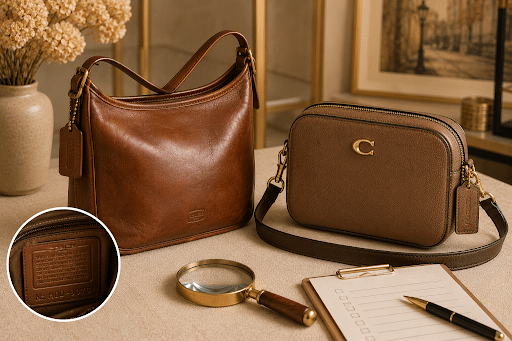
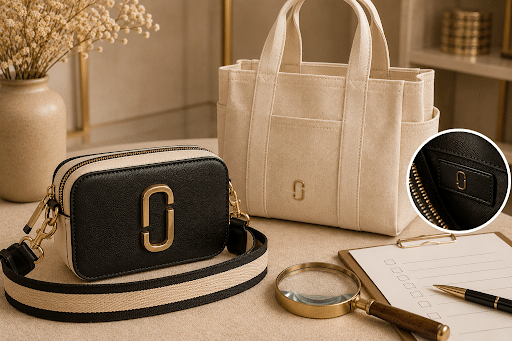
- Check serials, date codes, and stamps: Every brand has its own system. For example, Louis Vuitton phased out visible date codes in 2021 in favor of embedded microchips, so a newer bag with an old-style date code should raise questions.
Expert Tip 1: Never authenticate from one detail alone. Counterfeiters may copy a serial number or heat stamp, but they often fail when you compare the stamp, stitching, leather texture, hardware weight, and interior construction together.
Condition Inspection: The Wear-Point Walk
Once the bag passes your first authenticity screen, move into condition grading. The most efficient method is to inspect the areas that lose value fastest: corners, handles, piping, hardware, interior, closures, and base feet.
This is the core of any used bag evaluation checklist because these wear points affect both price and buyer confidence.
- Corners: Look for rubbing, leather thinning, color loss, exposed canvas, or touch-up paint. A refinished corner may show a slightly different sheen under bright angled light.
- Handles: Check for darkening, cracking, stretching, loose stitching, and oil transfer. Louis Vuitton vachetta handles often reveal a bag’s real usage history.
- Piping: Examine seam edges for exposed white, grey, or fabric core. Damaged piping is expensive to repair and can quickly lower condition grade.
- Hardware: Separate normal micro-scratches from plating loss, tarnish, dents, or peeling. Light scratches may still qualify as excellent condition, while plating loss usually drops the bag lower.
- Interior lining: Look inside pockets, corners, seams, and the base for pen marks, lipstick, makeup, fragrance, oil, or sticky residue.
- Closures and zippers: Open and close every zipper, clasp, lock, snap, and turn-lock. A beautiful bag with a failing closure is not an excellent-condition bag.
- Base feet and structure: Check for sagging, corner collapse, stains, scratches, and uneven wear on metal feet.
Use natural light whenever possible. Indoor yellow lighting can hide discoloration, while flash can make minor wear look worse than it is. A phone flashlight held at an angle is useful for spotting repainted leather, uneven texture, and hidden scratches.
Market Comps and Pricing: The Reseller Math
Condition only matters when paired with market demand. A rare bag in fair condition may still outperform a common bag in excellent condition, while an unpopular color may sit unsold even when priced below retail.
To price like a reseller, pull at least three sold comps — not asking prices. Look for the same model, size, color, leather type, hardware finish, and condition grade. A black Chanel Classic Flap with gold hardware is not the same comp as a seasonal tweed flap in a bright color.
- Use sold listings: Review completed sales from marketplaces such as eBay sold listings, luxury resale platforms, and consignment archives when available.
- Compare condition honestly: Do not use a pristine “full set” price to value a bag with corner wear, missing accessories, and interior staining.
- Adjust for seasonality: Giftable classics may perform better during Q4, while lighter neutrals often gain interest in spring and summer.
- Account for fees: Marketplace and consignment fees can significantly reduce your net payout. A high sale price does not always mean a high profit.
- Understand velocity: Hermès Birkin and Kelly bags, Chanel Classic Flaps, and core Louis Vuitton styles usually move faster than niche silhouettes or unusual colors.
For buy-side pricing, many professional resellers target a margin after fees, authentication costs, repairs, shipping, and possible returns. That means the safe purchase price is often much lower than the final resale price.
Expert Tip 2: When in doubt, price the flaw, not the fantasy. A seller may describe a bag as “barely used,” but visible handle darkening, rubbed corners, or sticky lining should be priced as real deductions.
Documentation and Provenance
Accessories and paperwork do not automatically prove authenticity, but they can support value when everything else checks out. A full set makes buyers feel more confident and often improves resale performance.
- Original receipt: A legible store receipt with matching item details can add value, especially for Hermès, Chanel, and limited-edition pieces.
- Dust bag and box: Missing packaging does not make a bag fake, but it may reduce buyer confidence and resale presentation.
- Care cards and authenticity cards: These should match the brand’s era and format. A card that looks too new for an older bag can be suspicious.
- Service records: Boutique repair or spa documentation may help value, especially if the work was appropriate and professionally done.
- Exotic skin paperwork: For Hermès and other exotic leather bags, CITES documentation can be essential for international resale.
Be cautious with “celebrity-owned” or “from a private collection” claims. Provenance only adds value when it is documented. A story without proof is just marketing.
What to Do If You Are Unsure
The smartest buying preloved bag tips are usually the least glamorous: slow down, verify, and do not let urgency pressure you into a bad purchase. If the seller says there are “five other buyers waiting,” that is not a reason to skip authentication.
- Use third-party authentication: For any single-bag purchase over $2,000, consider professional authentication before payment or within the return window.
- Buy your first pieces from trusted sellers: Paying a premium to learn what authentic leather, hardware, stitching, and structure feel like can save you from expensive mistakes later.
- Build a reference library: Photograph authentic bags you handle, including stamps, tags, zippers, screws, lining, stitching, and hardware finishes.
- Keep a grading log: Note the condition, asking price, sold price, and time-to-sell for bags you study. Over time, patterns become obvious.
- Walk away from pressure: A legitimate seller should allow clear photos, reasonable questions, and authentication time.
If you are evaluating a bag online, request sharp photos of the corners, handles, interior, serial/date code area, heat stamp, zipper pulls, hardware engraving, bottom, and strap attachment points. Blurry photos are not harmless; they are missing information.
Summary: Inspect First, Price Second, Buy Last
Learning how to inspect a pre-owned handbag, used bag evaluation checklist, buying preloved bag tips all come down to discipline. Start with authenticity, move through condition, compare real sold prices, verify documentation, and only then decide whether the bag is worth buying.
A beautiful designer bag can still be a poor purchase if the wear is hidden, the price is inflated, or the authentication details do not line up. But when you evaluate like a reseller, you buy with confidence instead of emotion.
Ready to shop smarter? Explore our curated collection of pre-loved designer handbags at BarbeeDreamhouse.com and find your next luxury piece with confidence.