Coach Bag Authentication: Creed, Serial Numbers & Modern vs. Vintage Markers
Coach Bag Authentication: Creed, Serial Numbers & Modern vs. Vintage Markers
This Coach authentication guide explains Coach creed number meaning, how to evaluate a real Coach bag serial number, and why modern and vintage Coach bags should not be judged by the same rules. Coach is one of the most accessible and collectible American handbag brands, but that popularity also means resale shoppers see plenty of confusing listings, incorrect dates, and counterfeit pieces.
The challenge with Coach authentication is that the brand has evolved. A 1970s or 1980s glove-tanned leather bag does not use the same numbering logic as a 2000s outlet bag or a modern Tabby. The safest approach is to study the creed, serial or style number, leather, stitching, hardware, hangtag, lining, and overall construction together.
What Is the Coach Creed?
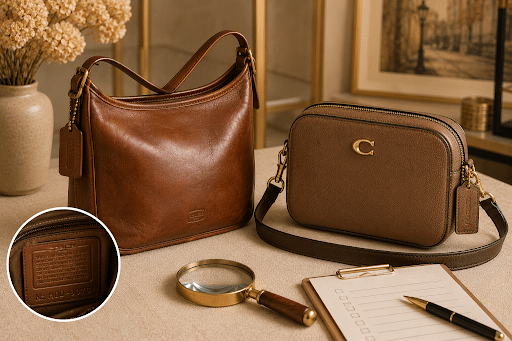
The Coach creed, sometimes called the story patch, is the leather patch or stamped area inside many Coach bags. It usually includes a short statement about the brand’s craftsmanship and a number below the text. On earlier vintage bags, the creed may be stamped directly into the leather instead of appearing on a separate patch.
For authentication, the creed should look like part of the bag, not an afterthought. The leather should match the bag’s quality and age. The stamping should be clean, readable, and properly aligned. A crooked patch, strange font, spelling errors, or a patch that looks newer than the rest of the interior should make you pause.
Not every genuine Coach item has a creed. Small leather goods, some accessories, samples, and certain modern styles may use different tags or markings. That is why a missing creed is a concern, not an automatic verdict.
Coach Creed Number Meaning: Vintage vs. Modern
Coach creed number meaning depends heavily on the era. Older vintage bags often have numeric serials that identify the individual bag more than the style. These early numbers are not always useful for a clean online style lookup.
In the mid-1990s, Coach shifted toward formats that often include production information before the dash and a style number after the dash. For many later bags, the final digits can help identify the model. That makes the number more useful for comparing the bag against known Coach styles.
Modern Coach bags may use creed patches, interior white fabric tags, style numbers, and other production labels depending on the year and design. Some bags from the mid-2010s moved style details away from the main creed patch and onto small interior tags.
Expert Tip: Do not decode a vintage Coach bag as if it were a modern Coach bag. A number that does not produce a style match may be normal on an older piece, while a modern bag with a mismatched style number is much more concerning.
How to Check a Real Coach Bag Serial Number
A real Coach bag serial number should support the rest of the bag’s story. It should not be the only evidence. Start by asking whether the format makes sense for the claimed era. A supposedly 1980s bag with a clearly modern letter-number code may be misdated. A newer bag with a style number that points to an entirely different model should raise concern.
Use the number to ask better questions:
- Does the serial or style number format match the bag’s approximate era?
- Does the number after the dash, if present, match the bag style?
- Is the creed patch or tag placed where it should be for that model?
- Does the stamping look clean but not freshly forced?
- Does the number match any original price tag or product tag included with the bag?
- Does the seller provide clear photos of the full creed, not just a cropped number?
A number can be copied. A counterfeit can show a real style number taken from another bag. The number matters, but it must be checked against the bag itself.
Vintage Coach Markers
Vintage Coach is known for thick glove-tanned leather, minimal branding, sturdy brass hardware, and classic practical silhouettes. Many vintage bags feel heavier and more substantial than they look in photos. The leather may show patina, small scuffs, darkening, or softening from age.
On vintage Coach, inspect the leather first. It should feel rich, dense, and natural, not thin, plasticky, or coated in a way that hides the grain. The bag should have functional construction: strong straps, clean seams, solid turnlocks, and practical pockets.
Vintage Coach styles may not have the same lining structure as modern bags. Some classic leather bags are unlined or show the suede side of the leather inside. That can be correct for many older designs. Do not assume every authentic Coach bag should have fabric lining.
Modern Coach Markers
Modern Coach bags vary widely by line. Boutique styles, outlet styles, collaborations, Signature canvas pieces, leather Tabby bags, Rogue bags, and seasonal designs can all have different construction details. This is where the real Coach bag serial number or style number becomes more helpful.
For modern pieces, compare the style number, color, hardware, lining, strap, and shape to official or well-documented examples. Modern Coach hardware should feel substantial for the design. Zippers should move smoothly. Edge paint should be neat. Stitching should be even and controlled.
Outlet bags can be authentic Coach, but they may have different style numbers and construction choices than boutique-line pieces. A style number beginning with an outlet-related marker does not automatically mean fake. It may simply indicate a made-for-factory or outlet style.
Leather, Stitching, and Hangtag Checks
Coach authentication is often easiest when you handle the bag. Authentic Coach leather should feel appropriate for the model. Pebbled leather should feel soft but durable. Smooth leather should not feel rubbery. Vintage glove-tanned leather should feel substantial and age naturally.
Stitching should be clean, even, and secure. Pay close attention to corners, strap bases, zipper ends, and handle attachments. Counterfeits often show sloppy stitching where stress is highest.
The hangtag is another useful clue. On many Coach bags, the hangtag leather should match or complement the bag material. A thin, flimsy, poorly cut hangtag on an otherwise substantial bag can be a warning sign. However, hangtags can be removed, replaced, or lost, so use them as supporting evidence only.
Expert Tip: If a seller claims a bag is authentic but refuses to show the creed, interior tag, hardware, corners, and strap attachments, move carefully. Strong resale listings should show the details that actually matter.
Common Coach Authentication Red Flags
Slow down if you see several of these issues together:
- Creed text with spelling errors or strange wording
- A serial or style number that belongs to a different bag
- A creed patch that looks glued, crooked, or newly added
- Leather that feels thin, shiny, or plastic-like
- Sloppy stitching at corners, straps, or zipper ends
- Hardware that feels hollow, overly bright, or poorly plated
- A hangtag that feels flimsy or does not match the bag quality
- Seller photos that avoid the interior, creed, or tags
- A price far below market with no condition explanation
Final Thoughts on Coach Authentication
A strong Coach authentication guide should never reduce the decision to one number. Coach creed number meaning changes by era, and a real Coach bag serial number is only useful when it matches the bag’s age, model, materials, and construction.
For vintage Coach, focus on leather quality, creed style, hardware, stitching, and silhouette. For modern Coach, compare the style number, tag placement, hardware, lining, and model-specific details. When every detail supports the same story, you can buy with much more confidence.
For more practical luxury resale guides and curated pre-owned designer pieces, visit www.BarbeeDreamhouse.com to browse the Barbee Dreamhouse collection.