The Anatomy of a Handbag: How Wear and Tear Impacts Resale Value
Handbag wear and tear, corners stitching hardware impact resale value, pre-owned bag flaws more than most buyers realize. A luxury bag can look beautiful at first glance, but small signs of use in the corners, handles, hardware, lining, and stitching can quickly change its resale price. For buyers, these details help prevent overpaying. For sellers, they explain why two bags from the same brand and style can sell for very different prices.
Every pre-owned luxury handbag tells a story through its wear. The key is knowing which flaws are cosmetic, which are repairable, and which suggest deeper structural damage. A lightly softened leather strap may be normal. Exposed piping, torn chain channels, peeling glazing, or heavy interior odor can significantly reduce buyer confidence and resale value.
Corners and Piping: The First Place Value Drops
The bottom corners are usually the first place a handbag shows visible wear. This is especially true for structured bags such as the Hermès Birkin, Hermès Kelly, Louis Vuitton Alma, Celine Belt Bag, and other styles that sit upright on flat surfaces.
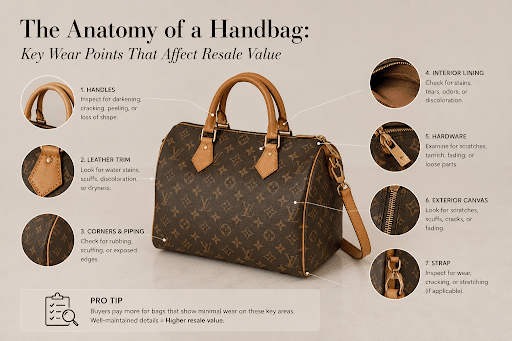
When inspecting corners, look for leather thinning, color rub-off, flattened texture, exposed piping, and signs that the internal structure is beginning to show. On dyed leathers such as Epi, Togo, Box Calf, and lambskin, corner wear may appear as fading, darkening, or smooth shiny patches where the grain has been rubbed away.
- Light corner rubs: Usually a 5–10% deduction if the rest of the bag is clean.
- Color loss or thinning leather: Often reduces value by 10–25% depending on brand and rarity.
- Exposed substrate or canvas fraying: Can reduce value by 25–40% or more.
- Disclosed professional corner restoration: May still reduce resale value by 15–20% because collectors prefer original condition.
Louis Vuitton Monogram canvas requires special attention. When corner wear breaks through the coated canvas and reveals the lighter cotton scrim underneath, many buyers consider it a major flaw. Even if the bag is still usable, visible fraying can be a near-total value killer for premium resale pricing.
Chanel is another strong example. Caviar leather generally resists corner wear better than lambskin, which is one reason Caviar Classic Flaps often command a resale premium. Lambskin bags, especially older pieces, may show corner darkening, grain compression, and softened structure much sooner.
Expert Tip #1: Always photograph corners in natural light from multiple angles. A corner that looks clean straight-on may reveal rub-off, piping splits, or leather thinning when photographed from below.
Handles, Straps, and Chain Channels
Handles and straps carry the weight of the bag, absorb hand oils, and take constant friction from the shoulder, wrist, or arm. Because they are both functional and highly visible, strap condition can heavily influence resale value.
Louis Vuitton vachetta leather is one of the clearest examples. Handles on Speedy, Neverfull, Alma, and other monogram styles naturally patina from pale beige to honey and eventually deeper caramel over time. Even patina is desirable because it suggests normal aging. Dark handprint staining, water spots, pen marks, or uneven discoloration can reduce value dramatically.
- Even honey patina: Usually acceptable and sometimes attractive to buyers.
- Dark handle staining: Can reduce value by 30–50% depending on severity.
- Watermarks on vachetta: Difficult to remove and often visible forever.
- Cracking at handle bases: A serious structural concern.
Chanel chain channels also deserve close inspection. On Classic Flaps and Reissues, the leather strip woven through the chain can develop chain-link impressions, thinning, darkening, or tearing. This type of wear is especially important because it affects both appearance and function.
Hermès bags require careful inspection at the handle base and strap attachment points. On Kelly bags, check the sangles, handle pivots, and shoulder strap connection points. Cracking or stretching in these areas can signal heavy use and may require expensive maison repair.
Replaced or “married” straps should always be disclosed. Even if a replacement strap is authentic, collectors usually value original matching components more highly. For Hermès, Chanel, and Louis Vuitton, a non-original strap can reduce resale value by 10–15% or more.
Hardware Finish Degradation
Hardware is one of the fastest ways to estimate how much a bag has been handled. Turn locks, zipper pulls, feet, strap clasps, logo plates, and chain links receive constant contact. Scratches may be normal, but plating loss, discoloration, or dull engraving can lower resale value.
Gold-plated brass, often seen on older Chanel and Hermès hardware, may wear at the edges first. On Chanel turn locks, look closely around the CC edges and clasp plate. On Hermès bags, inspect feet, plaques, sangles, and lock hardware for scratches or plating inconsistencies.
- Hairline scratches: Common and usually minor unless the bag is listed as excellent or pristine.
- Plating loss: More serious, especially on gold-tone hardware.
- Deep scratches: Noticeable in photos and harder to minimize.
- Loose turn locks or clasps: Functional flaws that may require repair.
- Flattened engraving: A sign of frequent handling and long-term wear.
Ruthenium and dark-coated hardware, such as Chanel So Black finishes or certain limited Hermès pieces, can be especially fragile. A scratch may expose lighter metal underneath, making the flaw far more noticeable and difficult to correct.
This is also where handbag wear and tear, corners stitching hardware impact resale value, pre-owned bag flaws all come together. A bag with clean leather but heavily scratched hardware may still be downgraded because buyers expect consistency across the entire piece.
Interior Lining, Zippers, and Structural Integrity
The interior of a handbag often reveals the truth about how it was used. A seller can polish hardware and condition leather, but pen marks, makeup stains, odor, and lining damage are much harder to hide.
Louis Vuitton microfiber and Alcantara-style linings, especially in Empreinte and some Epi bags, can hold stains permanently. Pen marks, lipstick, foundation, and spilled liquids are among the most common interior issues. Chanel interiors may show cracking at folds, especially in lambskin-lined styles, while older fabric linings may pill or discolor without necessarily affecting structure.
- Pen marks: Very common and often permanent.
- Makeup stains: Reduce value, especially in light-colored interiors.
- Musty or smoky odor: Can deduct 10–20% because smells often return after cleaning.
- Torn lining: A stronger deduction because repair may be invasive.
- Sticky lining: A major issue on certain vintage bags and often costly to correct.
Zippers should glide smoothly, sit straight, and match the expected quality of the brand. Many European luxury houses have used suppliers such as Lampo, Riri, and Éclair across different eras and styles. A stiff zipper does not always mean counterfeit, but mismatched zipper branding, uneven zipper tape stitching, or cheap-feeling pulls should raise concern.
Glazing is another important resale factor. This painted edge sealant appears on handles, straps, tabs, and seams. Over time, it may crack, peel, melt, or become sticky. While glazing can often be refreshed, disclosed restoration can still affect collector value.
Stitching, Seams, and Shape Retention
Stitching may look like a small detail, but it is one of the strongest indicators of construction quality. Loose stitches, skipped stitches, popped seams, or uneven tension can suggest heavy use, poor storage, repair work, or counterfeit construction.
On luxury bags, stitching should generally be consistent, secure, and appropriate for the leather type. Hermès saddle stitching, Chanel quilting alignment, Dior Cannage stitching, and Louis Vuitton seam work each have distinct brand standards. When stitches begin to loosen at stress points, the bag may be moving from cosmetic wear into structural compromise.
- Loose stitches near handles: A warning sign because the area carries weight.
- Popped stitches on corners: Often appear with piping wear.
- Misaligned quilting: Can hurt Chanel and Dior resale desirability.
- Collapsed shape: Reduces value on structured bags like the Birkin, Kelly, Alma, and Lady Dior.
- Overstuffed or warped panels: May indicate poor storage or repair.
Expert Tip #2: Place the bag on a flat surface and view it from the front, side, and top. If the silhouette leans, caves inward, or twists, the structure may be compromised even if the leather looks clean.
What to Do If You Are Unsure
If you are evaluating a bag and cannot tell whether the wear pattern is normal aging or a serious flaw, get a second opinion before buying or selling. Professional authenticators and experienced resellers assess wear in context: production year, leather type, brand standards, repair history, and market demand all matter.
For example, a soft vintage Chanel lambskin flap may still be desirable with gentle corner wear, while a newer Chanel listed as “excellent” should meet a much higher condition standard. A Louis Vuitton Neverfull with even patina may be easy to resell, but the same bag with cracked vachetta, stained lining, and frayed corners will attract a very different buyer.
When documenting handbag wear and tear, corners stitching hardware impact resale value, pre-owned bag flaws, be specific. Instead of saying “normal wear,” describe the actual condition: light corner rubbing, hairline hardware scratches, clean lining, minor strap creasing, or visible glazing cracks. Clear condition notes build buyer trust and reduce returns.
Summary: Small Flaws Can Make a Big Price Difference
The best way to evaluate a pre-owned luxury handbag is to inspect it like a reseller: corners first, then handles, straps, hardware, interior, stitching, and structure. Cosmetic wear may only create a small deduction, but structural issues, odor, exposed substrate, torn lining, replaced straps, and major hardware loss can significantly reduce resale value.
Understanding handbag wear and tear, corners stitching hardware impact resale value, pre-owned bag flaws helps you buy smarter, price more accurately, and protect your investment. Before purchasing your next luxury piece, review the wear points carefully and compare condition against current market pricing.
Ready to shop beautiful pre-owned designer bags with confidence? Browse our curated collection at www.BarbeeDreamhouse.com.