Bottega Veneta Authentication: Intrecciato Weave, Authenticity Cards & Hardware
Bottega Veneta authentication, Bottega Veneta serial number checks begin with one simple truth: the brand does not rely on loud logos. Bottega Veneta built its identity around the idea that “when your own initials are enough,” making craftsmanship the real signature. From the iconic Intrecciato weave to the buttery leather, discreet stamping, and refined hardware, authenticating a Bottega bag requires close attention to construction rather than branding.
Counterfeiters have improved dramatically, especially across the Daniel Lee era from 2018 to 2021 and the Matthieu Blazy era from 2021 onward. The Cassette, Pouch, Mini Jodie, Andiamo, and Padded Cassette are among the most copied styles. This guide walks through the four most important authentication checkpoints to review before buying or selling.
1. Inspect the Intrecciato Weave Construction
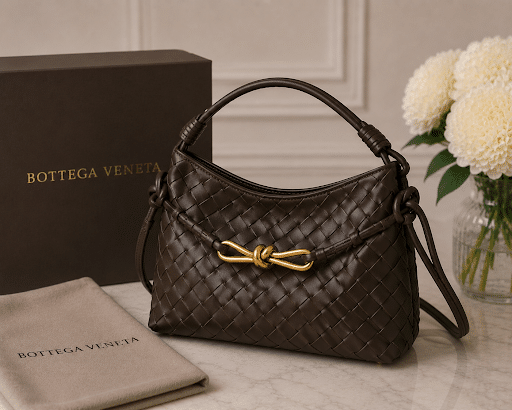
The Intrecciato weave is Bottega Veneta’s most recognizable design code, but it is also one of the hardest details for counterfeiters to execute correctly. Authentic Intrecciato is made from leather strips woven into the structure of the bag. It should not look like a stamped, printed, embossed, or glued-on pattern.
On a genuine bag, the weave feels dimensional and flexible. When you gently flex the panel, the strips should move slightly as interlocking leather. A fake often feels stiff, flat, or overly rigid because the weave is glued onto a backing or imitated with surface texture.
- Check strip width: Traditional Intrecciato strips are usually consistent in width, often around 8–12mm depending on the style and era.
- Look at the angle: The weave should sit at a consistent 45-degree angle across the panel.
- Study the edges: Strip ends should be tucked and finished cleanly, not frayed, lifting, or covered in visible glue.
- Compare panels: Weave alignment should remain intentional at seams, corners, and side panels.
- Feel the surface: Authentic leather has softness and movement; fake woven panels often feel plasticky or stiff.
The Cassette and Padded Cassette, introduced during the Daniel Lee era, use a much larger, pillowy weave. Counterfeits often get the proportions wrong, making the padded strips look too flat, too inflated, or uneven from square to square. Maxi Intrecciato should still show a true over-under pattern, even when the strips are wide.
Expert Tip #1: Do not judge a Bottega Veneta bag by the weave alone. Some authentic styles intentionally use oversized, padded, or softer weave variations. The key is consistency: strip width, leather quality, angle, and edge finishing should all tell the same story.
2. Review the Brand Stamp, Authenticity Card, and Serial Number
The interior stamp is a major checkpoint in Bottega Veneta authentication. On most modern bags, the stamp reads “BOTTEGA VENETA” with “MADE IN ITALY” beneath it. The lettering should be clean, precise, and slightly compressed. Counterfeits often use a generic sans-serif font that appears too wide, too bold, too shallow, or unevenly spaced.
Older Bottega Veneta bags may show slight wordmark differences, particularly on pre-2018 pieces. Daniel Lee-era bags introduced subtle updates, while Blazy-era pieces continued with a refined, minimalist look. Because of these era differences, the stamp should be evaluated in context with the bag’s model, date, and materials.
The authenticity card is another important detail. Genuine cards are typically small, matte, and cream or off-white. They may include a model code and unique serial number that should correspond with the small interior leather tag. A correct Bottega Veneta serial number should look deliberate and cleanly printed or stamped, not blurry, crooked, or randomly formatted.
- Match the numbers: The card and interior tag should correspond where applicable.
- Check the model code: Many codes begin with a structure similar to “B0” followed by additional characters.
- Look for consistency: Font, spacing, and placement should be neat and aligned.
- Inspect security details: Some newer cards may include hologram or microprint-style features.
- Be cautious with missing cards: A missing card does not automatically mean fake, but it lowers confidence.
Some counterfeiters include cards that look impressive at first glance but fail under closer inspection. A recent bag with a flat, flimsy, poorly printed card can be a red flag, especially when paired with weak stamping or a suspicious interior tag.
3. Examine Hardware, Zippers, and Edge Finishing
Bottega Veneta hardware is usually understated rather than flashy. Classic styles often feature brushed gold, aged silver, or tonal hardware. The finish should feel refined, not overly yellow, lightweight, or mirror-shiny unless the specific style calls for a brighter finish.
The Knot Clutch is a useful example. Its signature metal knot closure should feel solid and weighty, with crisp sculptural detailing. On fakes, the knot may feel hollow, poorly cast, or too light. Lee-era bags introduced bolder and brighter hardware on certain Cassette and Pouch styles, while Blazy-era designs often refined the look with more tonal or sculptural details.
- Inspect zippers: Bottega often uses high-quality zippers such as Lampo or Riri on relevant styles.
- Look underneath pulls: Branding is often found on the underside rather than loudly displayed.
- Check leather pulls: Pull tabs should be neatly stitched and finished, not glued or roughly cut.
- Feel the hardware weight: Authentic hardware should feel substantial for the size of the piece.
- Study the finish: Plating should be smooth, even, and resistant to easy flaking.
Edge paint is one of the strongest tells in Bottega Veneta authentication, Bottega Veneta serial number review. Authentic edges are carefully painted in multiple coats and hand-burnished for a smooth, durable finish. On a new-condition bag, cracking, lifting, bubbling, or chunky edge paint is a serious concern.
4. Feel the Leather, Lining, and Interior Details
Bottega Veneta is known for exceptional leather. Depending on the model, the house may use nappa lambskin, calfskin, or cervo deerskin. Nappa should feel buttery and smooth. Calfskin should feel more structured and refined. Cervo has a soft, slightly powdery hand-feel with natural grain and movement.
The Pouch and Mini Pouch are especially dependent on leather quality. Authentic versions have soft napa lambskin with even, natural ruching. The gathers should look fluid, not stiff or forced. Counterfeit Pouches often feel too rigid, too shiny, or too synthetic, and the folds may appear awkward instead of softly sculpted.
- Smell the interior: A strong chemical odor can indicate synthetic materials or poor adhesives.
- Check the lining: Modern Bottega bags often use suede or microsuede in tonal shades.
- Inspect the interior tag: It should be cleanly stitched into a seam, not glued on.
- Review edge paint: The tag should show the same quality standards as the exterior.
- Compare dust bags: Authentic dust bags are usually brown, tan, or sometimes green on select newer pieces.
Packaging should also feel restrained and luxurious. Many authentic boxes are matte tan or brown with clean debossed branding. High-gloss boxes, loud logos, or flimsy packaging are not typical of Bottega Veneta’s quiet-luxury presentation.
Expert Tip #2: Packaging can support authentication, but it should never be the deciding factor. Counterfeiters can copy dust bags and boxes more easily than they can replicate leather quality, edge paint, and Intrecciato construction.
What to Do If You Are Unsure
Intrecciato is harder to fake than it looks, but the gap has narrowed. This is especially true for Cassette, Pouch, and Jodie styles, where the larger shapes and minimal branding can make counterfeits appear convincing in photos. Always ask for clear images of the weave, corners, interior stamp, authenticity card, serial tag, zipper pulls, and edge paint before purchasing.
For a confident review, compare all checkpoints together. A genuine bag should feel consistent from the outside in. The weave, leather, lining, hardware, serial details, and packaging should all align with the same era and model. If one detail feels off, investigate further. If several details feel wrong, walk away.
Summary
Bottega Veneta authentication is a craftsmanship-first process. Start with the Intrecciato weave, then move to the interior stamp, authenticity card, Bottega Veneta serial number, hardware, leather, lining, and packaging. Authentic Bottega pieces feel quiet, precise, and luxurious. Counterfeits usually reveal themselves through inconsistent weave angles, poor edge paint, cheap lining, incorrect fonts, or suspicious serial details.
Ready to shop with confidence? Explore our curated collection of authenticated designer handbags and find a timeless Bottega Veneta piece you can love for years: Shop our Bottega Veneta collection.