Vintage Coach Bags from the 1980s: A Serial Number Authentication Guide
Vintage Coach serial numbers, 1980s Coach bag authenticity, and the Coach creed serial number are some of the most searched clues for buyers trying to confirm whether an older Coach bag is the real thing. But here is the first rule: a 1980s Coach serial number is not a modern lookup code. It is only one part of the authentication picture.
For collectors, vintage Coach from the 1980s has a very specific appeal. These bags were practical, understated, and beautifully made from thick glove-tanned leather. They were not logo-heavy statement pieces. They were quiet luxury before the phrase existed: structured silhouettes, simple hardware, rich leather, and interiors that often showed the raw beauty of the hide.
Because demand for vintage Coach has grown, so has confusion around dating and authentication. Many shoppers expect the serial number to reveal the exact year, factory, and style name. That works better on later Coach bags, especially after the 1990s format changes. With 1980s bags, the process is more nuanced.
What Is the Coach Creed?
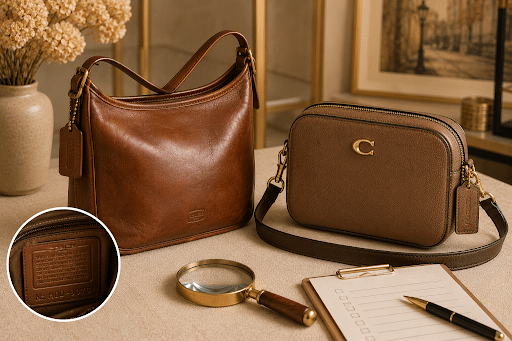
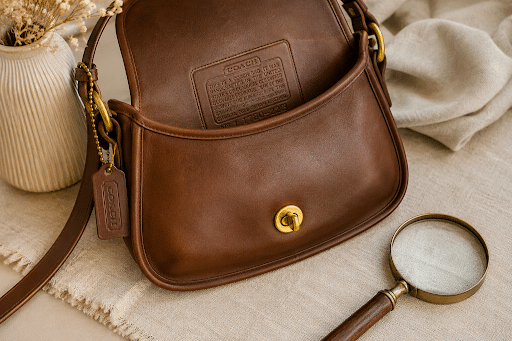
The Coach creed is the leather story patch inside the bag. It usually contains a short statement about the bag, the Coach name, and a stamped serial number. On some earlier vintage pieces, the creed or number may be stamped directly into the leather rather than appearing on a separate patch.
When reviewing a 1980s Coach bag, the creed should be read as a total object, not just a number. Look at the wording, stamp depth, leather texture, spacing, and whether the patch feels consistent with the age and construction of the bag.
A genuine-looking Coach creed serial number should not feel randomly slapped onto the bag. It should look integrated into the interior, with stamping that has aged naturally alongside the leather.
How 1980s Coach Serial Numbers Differ from Later Coach Codes
The biggest mistake buyers make is trying to decode an 1980s Coach serial number as if it were a post-1994 Coach code. Later Coach bags often use a format where part of the number can indicate production information and the number after the dash may relate to the style. That is not how most 1980s Coach serial numbers should be treated.
For many vintage Coach bags from the 1980s, the serial number is an all-numeric identifier. It may include a dash, and it may appear in formats that look unfamiliar compared with modern Coach bags. In most cases, it does not directly tell you the style name, production month, or exact year.
That means a seller claiming, “This 1980s Coach bag is style number 1234 because the creed says 1234,” may simply be misunderstanding the system. The number may be authentic, but it may not identify the bag style.
Expert Tip: Do not reject a true 1980s Coach bag just because the serial number does not produce an easy online match. Pre-1990s Coach authentication depends more heavily on creed consistency, leather quality, hardware, shape, and construction than on a searchable style code.
What a 1980s Coach Creed Serial Number Can Tell You
A serial number can still be useful. It can help you decide whether the bag fits the era being claimed. For example, a supposed 1980s bag with a clearly modern letter-number-letter code may not be from the 1980s at all. It may be a later Coach style inspired by an older silhouette, or it may be incorrectly dated by the seller.
Use the number to ask better questions:
- Does the serial number format make sense for a pre-1994 Coach bag?
- Is the stamping clean but not overly perfect?
- Does the creed wording look period-appropriate?
- Does the number placement look natural, or does it appear added later?
- Does the bag’s shape match known vintage Coach silhouettes?
Authentication is about consistency. A credible 1980s Coach bag should make sense from every angle: serial, creed, leather, stitching, hardware, and design.
Leather and Construction Clues on 1980s Coach Bags
Classic 1980s Coach bags are famous for their leather. Many were made from thick glove-tanned leather that feels substantial in the hand. The surface may show scuffs, patina, softening, or natural darkening from decades of use. Those signs can actually support the story of the bag when they appear honestly.
Be cautious with leather that feels thin, plasticky, overly coated, or artificially pebbled on a style that should have smooth vintage Coach leather. A restored bag is not automatically bad, but heavy repainting can hide condition issues and reduce collector confidence.
Stitching should be even and functional, not decorative in a flashy way. Vintage Coach was built around utility. Seams, straps, and turnlocks should feel sturdy. Hardware may show tarnish, dulling, or light scratches, especially on brass-tone pieces. That is normal for an older bag.
Common 1980s Coach Authentication Red Flags
No single red flag proves a bag is counterfeit, but several together should make you slow down. When reviewing vintage Coach serial numbers and creed details, look for patterns of inconsistency.
- Creed text with obvious spelling errors or strange wording
- A serial format that looks too modern for an advertised 1980s bag
- A creed patch that looks newer than the surrounding interior leather
- Thin or shiny leather on a bag that should feel substantial
- Hardware that feels lightweight or poorly finished
- A seller who relies only on the serial number and avoids photos of the creed, corners, straps, and interior
- A bag described as “rare 1980s” without a clear reason for the dating
Also be careful with absolute rules. Some authentic Coach pieces vary by model, production period, and market. A bag can be genuine and still surprise you. The goal is not to memorize one perfect formula; the goal is to build a pattern of evidence.
How to Cross-Check the Bag Style
Because many 1980s Coach serial numbers do not function as style numbers, you need to identify the style another way. Start with the silhouette. Is it a City Bag, Court Bag, Station Bag, Duffle Sac, Willis-style shape, Pocket Purse, or another classic design family?
Compare the bag’s measurements, strap style, pocket layout, turnlock placement, and flap shape against reputable vintage Coach references, old catalogs, and well-documented resale listings. Color alone is not enough. Vintage Coach colors can shift with age, lighting, conditioning, and prior care.
If a bag’s serial number does not “match” the name a seller provides, that does not automatically mean the bag is fake. It may mean the seller is using a later naming convention, guessing the style, or relying on another resale listing that was also mislabeled.
Condition Matters for Resale Value
For resale shoppers, 1980s Coach bag authenticity is only half the decision. Condition matters just as much. A genuine bag with dry leather, cracked straps, heavy ink marks, or structural sag may require careful restoration. A cleaner example with original character will usually be more desirable to collectors.
Look closely at:
- Corner wear and edge dryness
- Strap cracking, stretching, or replaced hardware
- Turnlock function and alignment
- Interior staining or odor
- Creed readability
- Signs of repainting, over-conditioning, or heavy dye work
Expert Tip: A little patina is not the enemy. Many vintage Coach collectors prefer honest age over aggressive restoration. Over-polished leather, heavy recoloring, or replaced parts can make the bag look cleaner in photos while lowering trust in the piece.
Buying Checklist for Vintage Coach Bags from the 1980s
Before purchasing, ask the seller for clear photos in natural light. You want more than one beauty shot. A serious listing should show the creed, serial number, front, back, base, corners, strap attachments, hardware, and interior.
Use this checklist before you buy:
- Confirm the creed is clear and consistent with the bag’s age
- Check whether the Coach creed serial number format fits a vintage piece
- Compare the silhouette to known vintage Coach styles
- Review leather quality and natural aging
- Look for signs of repainting or unusual coating
- Check strap and hardware integrity
- Be cautious of listings that overpromise exact dating without evidence
When in doubt, treat the bag as “needs more verification” rather than assuming the worst. Vintage Coach is collectible because it has history, and history often comes with variation.
Final Thoughts on 1980s Coach Bag Authenticity
Vintage Coach bags from the 1980s are beloved because they combine durability, simplicity, and understated American leather craftsmanship. But authenticating them requires a different mindset than authenticating newer Coach bags. The serial number matters, but it is not the whole story.
Use the creed, serial format, leather quality, construction, hardware, and silhouette together. If all of those details support one another, you are in a much stronger position as a buyer or collector.
For more practical luxury resale guides and carefully selected pre-owned designer pieces, visit www.BarbeeDreamhouse.com to browse the Barbee Dreamhouse collection.