How to Authenticate a Chloé Handbag: Date Stamps, Hardware & Serial Tags
Chloé bag authentication, Chloé serial number checks, and learning how to authenticate Chloé Marcie styles all require a full-detail inspection. Unlike some luxury brands with highly public decoding systems, Chloé authentication is more about consistency: the serial tag, date stamp, leather, hardware, stitching, lining, and silhouette should all support the same story.
Chloé handbags have a softer, more relaxed identity than many structured luxury bags. The brand is known for feminine shapes, equestrian references, curved lines, substantial leather, and understated branding. That quiet design language is exactly why authentication can be tricky. A fake Chloé bag may not rely on loud logos, so buyers have to look closely at construction.
This guide focuses on the details resale shoppers should inspect before buying a pre-owned Chloé bag, especially popular styles such as the Marcie, Paddington, Faye, Drew, Tess, and Woody.
Start with the Overall Bag Shape
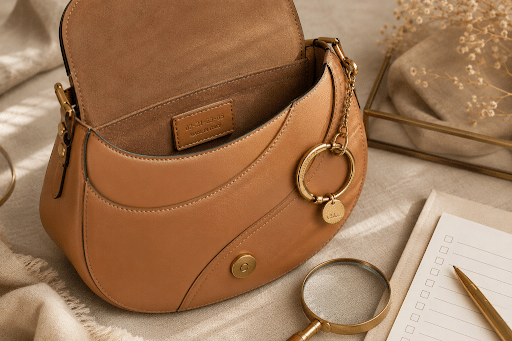
Before checking a Chloé serial number, study the silhouette. Chloé bags are rarely stiff in a harsh way. Even structured styles usually have some softness or curve. The Marcie, for example, is recognized for its rounded saddle shape, front flap, decorative saddle stitching, and relaxed 1970s-inspired feel.
A fake may look almost right in a single listing photo but feel wrong when you compare proportions. Watch for flaps that are too flat, curves that are too sharp, straps that look too thin, or tassels and tabs that feel like costume details rather than integrated design elements.
For the Marcie specifically, compare the front stitching, flap shape, strap attachment, tassel placement, and side profile. If the bag looks boxy, flimsy, or oddly symmetrical, pause before purchasing.
Where to Find the Chloé Serial Number
Many Chloé bags have a serial or date code stamped on a small leather tab inside the bag, often near or inside an interior pocket. Depending on the style and production period, the tag may be on the left or right side, stitched into a seam, or positioned in a less obvious interior location.
The format can vary. Some Chloé bags use short number groupings separated by hyphens or dots. Others have longer numeric sequences. Some later bags may also include a hologram-style sticker or card association, though accessories can be lost, removed, or separated from the bag over time.
The important point is this: the Chloé serial number should be treated as one clue, not final proof. A clean serial tag does not automatically make a bag authentic, and a missing accessory does not automatically make it fake.
Expert Tip: Be cautious with sellers who rely only on the serial number. Ask for close photos of the tag, interior label, zipper, hardware, stitching, base, strap, corners, and lining. Real authentication comes from matching details, not one isolated code.
How to Evaluate a Chloé Date Stamp
Chloé date stamps are commonly discussed in the resale market, but they are not always simple to decode. Some number combinations are interpreted as production month, year, batch, factory, or quality-control information, but Chloé has not made every code format public for easy consumer lookup.
That means you should avoid absolute claims. Instead, ask whether the number format makes sense for the bag style and era. A Paddington from the mid-2000s may show a different tag style than a newer Marcie saddle bag. A newer Tess or Woody may have different interior details than an older slouchy leather satchel.
Look for these serial and date stamp qualities:
- Clean stamping that is readable without looking freshly forced
- Spacing that appears intentional and balanced
- A tag that feels properly stitched into the interior
- Leather on the tag that matches the bag’s age and quality
- No obvious glue, crooked placement, or strange font weight
- No duplicate serial number appearing across multiple unrelated online listings
If a code looks blurry, shallow, oddly printed, or too perfect for a heavily worn bag, continue investigating.
Inspect the Interior Logo and Label
Chloé branding is usually refined and restrained. Interior logo stamping should look clean, centered where appropriate, and consistent with the model. The accent in “Chloé” matters. Letter spacing, depth, and alignment should look polished, not crowded or uneven.
On leather interiors, the stamp should sit naturally in the material. On fabric or lined interiors, the label or stamp should not look like an afterthought. A misspelled brand name, awkward accent mark, messy embossing, or off-center logo is a serious red flag.
Also inspect the lining. Chloé linings vary by model and era, so do not assume every bag should have the same interior. Instead, compare the lining to the specific style you are buying. The inside should feel finished, intentional, and durable.
Hardware Checks: Weight, Finish, and Function
Chloé hardware is one of the most important authentication checkpoints. The brand often uses warm brass-tone, gold-tone, or antique metal finishes depending on the style. Hardware should feel substantial for the size of the bag, not hollow or overly shiny in a cheap way.
On a Marcie, inspect the buckles, rings, studs, strap hardware, zipper pull, and tassel hardware. On a Paddington, the padlock and key details are especially important. On Faye and Drew bags, the ring, chain, clasp, and front hardware should be smooth, aligned, and well finished.
Check for:
- Even metal tone across matching hardware pieces
- Smooth zipper movement
- No sharp unfinished edges
- Secure strap attachments
- Engraving or stamping that matches the model and era
- No lightweight, plastic-like feel
Normal tarnish or small scratches can appear on pre-owned hardware. That is different from hardware that looks poorly plated, overly yellow, or inconsistent from piece to piece.
Leather Quality and Stitching
Chloé leather should feel rich and tactile. Many classic Chloé bags use grained calfskin, smooth leather, suede, or mixed materials depending on the design. A Marcie should often have a soft but substantial leather feel, with stitching that supports the curved equestrian-inspired shape.
Counterfeit bags often fail in the leather. They may feel thin, dry, plasticky, overly pebbled, or strangely stiff. The grain may look machine-stamped rather than natural. On a pre-owned bag, honest leather aging is normal, but peeling, bubbling, chemical odor, or heavy surface coating should raise concern.
Stitching should be consistent and purposeful. Chloé stitching can be decorative, especially on Marcie styles, but it should still look controlled. Uneven thread tension, sloppy corners, loose seams, or mismatched thread color can suggest poor construction or later repair.
Expert Tip: When trying to authenticate Chloé Marcie bags, focus on the front saddle stitching. It should follow the curve of the bag naturally. If the stitching looks flat, crooked, too widely spaced, or disconnected from the bag’s shape, compare it against verified examples before buying.
Authenticity Cards, Dust Bags, and Receipts
Extras can support Chloé bag authentication, but they do not prove authenticity by themselves. Dust bags, cards, receipts, and boutique packaging can be lost, swapped, or counterfeited. A bag with no original accessories may still be authentic, while a bag with a full set may still need careful review.
Use accessories as supporting evidence only. If a seller includes a receipt, check whether the item description, date, boutique location, and style information make sense. If there is an authenticity card or hologram detail, compare it with the interior serial tag and overall production era.
Red Flags When Buying Pre-Owned Chloé
Slow down if you see several of these issues together:
- The Chloé serial number is missing from a style that typically has one
- The serial tag looks glued, crooked, or newly attached
- The hardware feels too light for the bag
- The leather smells chemical or feels plastic-coated
- The logo stamping is uneven, misspelled, or missing the accent
- The Marcie stitching does not follow the curved design correctly
- The seller refuses clear interior or serial tag photos
- The price is far below market with no condition-based explanation
Final Thoughts on Authenticating Chloé Bags
Authenticating a Chloé handbag is about the full picture. The date stamp, hardware, serial tag, leather, stitching, and silhouette should all work together. A Chloé serial number can help guide your review, but it should never replace a careful inspection of craftsmanship.
Whether you are shopping for a Marcie saddle bag, a Paddington, a Drew, or a newer everyday Chloé style, take your time. Compare the details, request strong photos, and buy from sellers who are transparent about condition and provenance.
For more luxury resale guides and curated pre-owned designer handbags, visit www.BarbeeDreamhouse.com to browse the Barbee Dreamhouse collection.