Signs a Pre-Owned Handbag Has Been Repainted or Restored: Refurbished Designer Bag Value, Repainted Leather Bag Risks & Altered Bag Detection
A refurbished designer bag, repainted leather bag, restored handbag value, altered bag detection issue can make or break a resale purchase. Restoration is the gray zone of the luxury handbag market. A professionally re-glazed Hermès Kelly through Hermès Spa can be legitimate and value-preserving, while an undisclosed backyard re-dye job on a Chanel Caviar flap can be a costly cover-up. The challenge is that both can look beautiful in listing photos. This guide explains how to spot repainting, re-glazing, replacement parts, and hardware restoration before you buy.
Re-Dyed and Repainted Leather: The Telltale Signs
Leather restoration is not always obvious at first glance. Many bags are refreshed specifically to photograph well, which means buyers need to know where imperfect work usually hides. The biggest clues are often found in seams, stitch holes, corners, and hidden leather panels.
How to Spot a Repainted Leather Bag
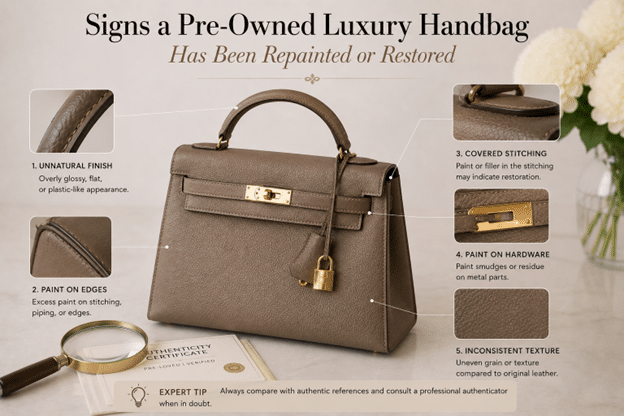
- Color pooling at seams and stitch holes: Aftermarket dye often settles into recessed areas, creating darker rings around stitching, piping, and corners.
- Loss of natural grain definition: Togo, Epsom, Caviar, and pebbled calfskin should have visible texture. Heavy repainting fills the grain and can make leather look flat or plastic-like.
- Stiffness or tackiness: Re-dyed leather may feel less supple than factory-finished leather. In humid conditions, poor refinishing can feel slightly sticky.
- Color mismatch in hidden areas: Check under the flap, inside strap channels, behind pockets, and inside gussets. Original color often survives where restorers could not easily reach.
- Hardware overspray: Tiny dye droplets on screws, feet, zipper teeth, or chain links suggest spray-dye work.
Common targets include black Chanel Caviar refreshed to hide whitening, Hermès Box Calf re-dyed to cover scratches, and Louis Vuitton Vachetta that has been bleached or darkened to disguise uneven patina. These changes can dramatically affect restored handbag value, especially when they are not disclosed.
Expert Tip #1: Ask for photos under raking light, meaning light angled across the surface instead of directly at it. This exposes filled grain, dye pooling, and uneven texture that flat listing photos often hide.
Re-Glazing and Edge Paint Restoration
Glazing is the painted resin sealant applied to cut leather edges on many luxury handbags, including Hermès, Goyard, Dior, Celine, and Saint Laurent. Original glazing should look intentional, smooth, and consistent, but not always machine-perfect. On hand-finished bags, very subtle tool marks can be normal.
Signs of Aftermarket Re-Glazing
- Uneven thickness: Edge paint that looks heavy, rounded, or lumpy may have been rebuilt.
- Bubbling or cracking: Poor glazing can separate from the leather or form tiny bubbles at stress points.
- Drips at corners: Corners are where rushed edge paint often collects.
- Color mismatch: True factory color matching is difficult, especially on bright, seasonal, or older leathers.
- Paint creeping onto canvas: On Goyard chevron canvas, re-glazed edges may show paint bleeding into the pattern.
Factory service is different from unauthorized restoration. Hermès Spa re-glazing, for example, is legitimate when documented and disclosed. A service receipt helps protect the bag’s resale story because buyers understand what was done, when it was done, and by whom.
Independent restoration from reputable leather specialists can also be high quality, but it is still not factory work. For resale, it should be described clearly. A buyer may still love the bag, but they should not pay untouched-condition pricing for a restored piece.
Replaced Components: Straps, Chains, Locks, Feet, and Zippers
Altered bag detection is not only about leather. Replacement parts can change originality, collector appeal, and resale price. A component may be authentic luxury hardware, but if it did not originally come with that bag, it should be disclosed.
Parts That Deserve Extra Attention
- Chanel chains: Link shape, leather weaving, chain weight, and finish can vary by era. A vintage flap with a modern replacement chain may still function beautifully, but it is no longer fully original.
- Hermès lock and clochette: Birkin and Kelly bags typically include a lock, keys, and clochette. Mismatched, missing, or replaced pieces can reduce value.
- Louis Vuitton feet: Original feet on styles such as the Alma are typically cleanly attached. Visible screw heads may suggest aftermarket work.
- Replacement zippers: Slider shape, tape weave, stamping, and brand markings should match the bag’s production era.
- Re-stitched handles: Look at stitch count, thread color, tension, and alignment. Aftermarket repairs may use synthetic thread or the wrong shade.
Factory replacement parts can preserve authenticity, but they still affect the bag’s story. A Hermès handle replacement or piping repair through the maison is very different from an undocumented local repair. Both should be mentioned in a listing, but they will not carry the same resale impact.
Hardware Re-Plating and Polishing
Hardware restoration can be especially difficult to evaluate from photos. Bright, shiny metal may look appealing, but over-polishing and re-plating can erase important details.
Red Flags in Restored Hardware
- Soft engraving: Polishing can reduce logo depth and make stampings look blurred or shallow.
- Uneven plating: Re-plated gold may appear thicker on flat surfaces and thinner along edges.
- Color shift: Aftermarket gold plating can look too yellow, too brassy, or too cool compared with original hardware.
- Mismatch between pieces: Compare turn-locks, zipper pulls, feet, chains, and studs. Some pieces may have been polished while others were untouched.
- Suspicious claims: Certain finishes, including ruthenium and rose gold tones, are difficult to restore convincingly outside factory channels.
Undisclosed hardware work can lower buyer confidence quickly. Even when the bag is authentic, buyers may worry about what else has been altered. That uncertainty can reduce restored handbag value more than the repair itself.
Why Disclosure Matters More Than the Work Itself
Restoration is not automatically bad. A refurbished designer bag can be a smart purchase when the work is professional, tasteful, and fully disclosed. Restoration extends the life of luxury goods, keeps bags wearable, and can make a beloved piece enjoyable again.
The problem is hidden restoration. A seller who describes a repainted leather bag as “excellent condition” without explaining the repaint is creating a trust issue. Buyers price bags based on originality, condition, rarity, and service history. When one of those facts is missing, the price becomes misleading.
Why Buyers Care About Restoration History
- Authenticity confidence: Heavy refinishing can cover construction details used during authentication.
- Long-term durability: Poor dye, paint, or glazing may crack, transfer, or peel over time.
- Collector value: Vintage buyers often prefer honest wear over excessive restoration.
- Resale pricing: A restored bag may still sell well, but usually not at the same price as an untouched equivalent.
- Dispute prevention: Clear disclosure reduces returns, chargebacks, and buyer frustration.
Expert Tip #2: Save screenshots of the listing description, restoration disclosures, and seller messages before purchasing. If a condition issue appears later, documentation helps clarify what was promised at the time of sale.
What to Do If You Suspect a Bag Has Been Restored
If something looks too perfect for the bag’s age, slow down. A 20-year-old bag can be beautifully preserved, but it should still show logical signs of age in the leather, hardware, lining, or corners. Overly uniform color, unusually glossy leather, or suspiciously flawless edges can all point to restoration.
Steps to Take Before Buying
- Request angled-light photos: Ask for close-ups of corners, seams, glazing, handles, underside, and hardware.
- Compare hidden and exposed areas: Look for color differences under flaps, inside pockets, and behind straps.
- Ask direct questions: “Has this bag been repainted, re-dyed, re-glazed, polished, or repaired?”
- Request receipts: Factory spa paperwork or professional repair documentation adds confidence.
- Use a qualified authenticator: Choose one who evaluates restoration history, not just brand authenticity.
For sellers, the best approach is simple: disclose everything. A repaired corner, refreshed edge, or replaced strap does not make a bag unsellable. In many cases, honest condition notes make the listing more trustworthy and help buyers understand exactly what they are purchasing.
Summary: Restoration Can Be Beautiful, But Transparency Protects Value
A restored handbag can still be authentic, wearable, and desirable. The key is knowing whether the work was factory-sanctioned, professionally performed, or poorly concealed. Repainted leather, re-glazed edges, replaced parts, and polished hardware all affect value differently, but undisclosed work is almost always the bigger problem.
Before buying, inspect the bag closely, ask direct questions, and look for signs of altered bag detection in hidden areas. A transparent seller will explain restoration history clearly. A vague listing with perfect photos and no details deserves extra caution.
Ready to shop with more confidence? Explore our curated collection of pre-owned luxury handbags at www.BarbeeDreamhouse.com and find a beautiful bag with the details you need to buy wisely.