How to Authenticate a Chanel Handbag: Serial Stickers, Stitching & Hardware Secrets
Learn how to authenticate a Chanel handbag using serial stickers, stitching, hardware clues, and expert tips before buying pre‑owned.
Authenticating a Chanel handbag has become more challenging as counterfeits grow increasingly sophisticated, especially in the booming resale market. Whether you’re investing in a vintage Diana, a mid‑2000s Classic Flap, or a current‑season model, knowing what to look for can help you avoid costly mistakes. This guide explains how to authenticate a Chanel handbag using serial stickers, stitching details, hardware cues, and other high‑signal indicators. You’ll also see where counterfeiters routinely fail, plus practical next steps if you’re still unsure. The insights below incorporate [Insert Main Keyword/Phrase] naturally throughout to support SEO while keeping the content reader‑friendly.
Interior Serial Sticker, Microchip, and Authenticity Card
The interior serial sticker or microchip is one of the highest‑value authentication checkpoints.
- Chanel introduced serial stickers around 1984–1986. Bags older than this period will not have one, and that is normal for the era.
- Serial format changed over time: 7‑digit codes appeared from about 1986 to 2005; 8‑digit codes from 2005 to 2021. From 2021 onward, Chanel uses a microchip instead of the traditional sticker.
- Authentic stickers include a clear overlay with two fine metallic lines beneath the digits. Counterfeit stickers often use a single band or flat printed foil that lacks depth.
- Fonts on authentic serial stickers are clean, evenly spaced, and consistent. Fakes may show uneven stroke weight, crooked spacing, or distorted numbers.
- The serial number must align with the correct era. For example, a 1990s bag should have 24k gold‑plated hardware and burgundy leather lining; pairing a 1990s serial with modern brushed‑gold finishing is a red flag.
- Authenticity cards must match the serial number exactly, but they alone don’t prove authenticity. Counterfeit cards are easy to produce and often accompany fake bags.
Expert tip: Compare the serial number to known Chanel production year charts and confirm the bag’s hardware, interiors, and leather type match that exact period.
Hardware: CC Turn‑Lock, Chain Straps, and Metal Finish
Chanel hardware provides some of the most reliable authentication clues, especially on Classic Flap and Boy Bag models.
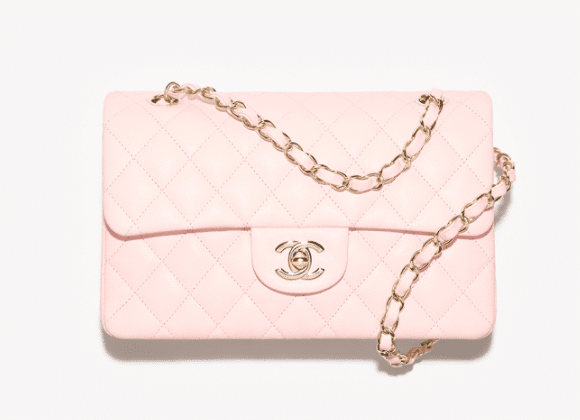
- On the CC turn‑lock, the right C should overlap the left at the top; the left C should overlap the right at the bottom. This orientation has remained consistent since the 1980s.
- Chanel hardware used 24k gold plating until the early 2000s. Later years introduced light gold, ruthenium, brushed gold, and aged finishes. A match between era and finish is essential.
- Authentic hardware is weighty and substantial. Counterfeits often feel light because they use hollow or low‑quality metals.
- The leather‑woven chain strap uses genuine leather identical to the bag’s body material. The strip should lie smooth and even within the chain. Fake chain straps often twist or use thin plastic‑coated leather.
- Engravings on authentic hardware are sharply defined, not laser‑etched or shallow. Look at the back plate of the turn‑lock: the “CHANEL” and ® mark should be crisp and centered.
- For Boy Bags (released in 2011), the rectangular clasp should feature clean “CHANEL PARIS” engraving with seamless edges and no mismatched metal components.
Stitching, Quilting, and Leather Texture
A Chanel handbag’s leather and stitching quality is difficult for counterfeiters to imitate.
- Authentic Classic Flap bags typically feature 10–11 stitches per side of each diamond in lambskin, or about 9–10 in caviar leather. Low stitch count is a common counterfeit giveaway.
- The quilting must align perfectly across seams — front flap to body and side panels. Misaligned diamonds are a fast indicator of an inauthentic bag.
- Lambskin should feel soft and smooth with a subtle grain. Caviar leather, introduced in 1984, has a pebble texture that appears organic and irregular. Fakes often show a machine‑stamped, repeating pattern.
- Stitching tension should be consistent with no loose threads, skipped stitches, or puckering at corners.
- Interior linings vary by era: the signature burgundy lambskin lining is correct for many Classic Flaps from the 1980s through 2008, while later bags use grosgrain or tone‑on‑tone lining. An era‑inappropriate lining is a serious red flag.
- Edge paint should appear thin, smooth, and evenly applied. Cracking, bubbling, or overly thick edges are typical for counterfeit bags.
Expert tip: Examine the bag under strong light. Authentic Chanel leather absorbs light softly, while many counterfeit leathers reflect light unnaturally or display overly glossy patches.
Zippers, Dust Bags, and Packaging Details
Although packaging can be faked, Chanel’s zipper and accessory components still reveal key differences.
- Vintage Chanel bags (pre‑2000) often used Lampo or Éclair zippers. After 2000, Chanel favored branded pulls or unmarked custom hardware. Chanel does not use YKK zippers on its handbag line, making them a reliable red flag.
- Zipper teeth should match the bag’s hardware finish and feel smooth when opened. Plastic teeth on older models are incorrect, and mismatched finishes are suspicious.
- Dust bags changed over the years: pre‑2000 dust bags were white with a black logo, early 2000s versions were black with a white logo, and modern dust bags feature camellia designs or thicker black drawstring styles.
- Dust bag logos should have crisp edges; counterfeit dust bags often show blurred or uneven printing.
- Authentic Chanel boxes are matte black with quality construction. Ribbon should be grosgrain, not satin, and the camellia flower is hand‑tied.
- Paperwork and receipts vary by region. European purchases often include VAT forms. A Chanel bag should never come with a certificate listing manufacturing in China, Vietnam, or Turkey.
What to Do If You’re Unsure
Even seasoned collectors can struggle to authenticate certain Chanel bags, especially “superfakes” that replicate stitching counts and metal engravings with impressive accuracy. If any detail feels off compared to the points above, take further steps.
- Seek a reputable professional authenticator. Many offer digital verification with detailed photo analysis.
- Use a service that provides documentation and high‑resolution comparison notes, especially for reselling or insurance.
- Verify the seller’s reputation, return policy, and proof of purchase. Established marketplaces often provide their own authentication layers and guarantees.
- If a deal feels too good to be true, it almost always is. Chanel handbags hold value, especially iconic silhouettes, and extreme discounts rarely occur outside of private sales.
Summary:
Authenticating a Chanel handbag involves carefully examining serial stickers or microchips, hardware finishes, leather quality, stitching consistency, zippers, and packaging. Counterfeiters may mimic some details, but they rarely get all of them right, especially when era‑appropriate combinations are evaluated together. With the guidance above, you can confidently apply these techniques to ensure your purchase is genuine. Browse our collection of authenticated luxury pieces and find a Chanel handbag you can trust at Barbee Dreamhouse Luxury Resale.